| The Double and Single Burner X Stoves |
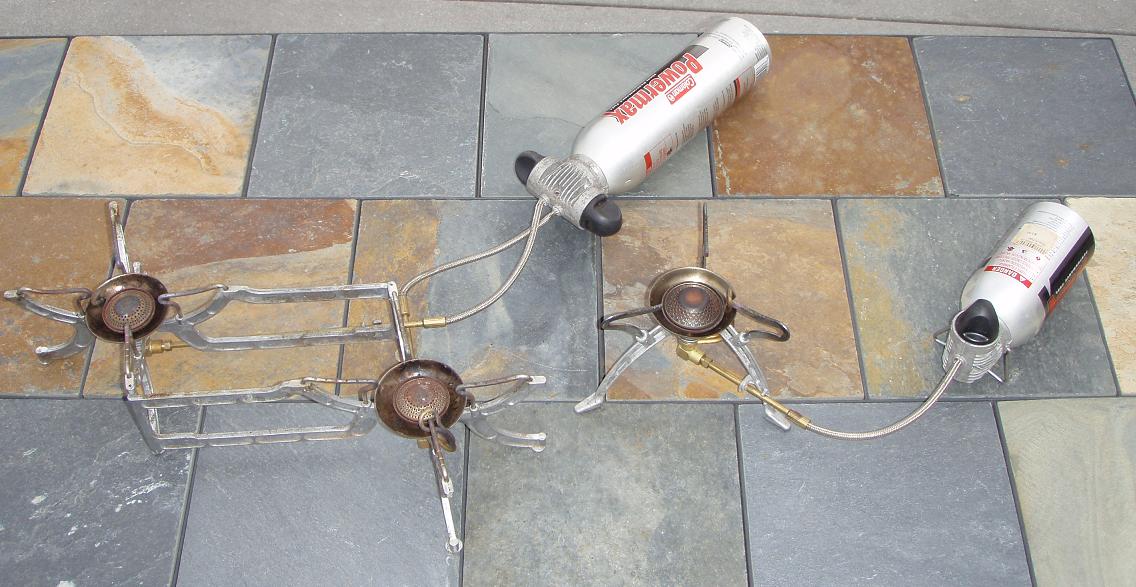 |
Coleman Xtreme and Xpedition
(Single burner Xtreme is 10.8 ounces)
(Double burner Xpedition is 25.3 ounces)
The Coleman Xtreme and Xpedition are both canister stoves which run off of a proprietary Coleman butane canister. The thing that makes these stoves different from most other butane canister stoves is that they have better cold weather performance than typical butane or butane/propane canister stoves.
This is because these Coleman stoves suck liquid butane out of the canisters, and this liquid butane is heated to a gaseous state in the stove, by means of a feeder tube which runs through the flame. I’m sure that there is something else going on that I’ve missed (it can’t be quite that simple or someone would have thought of it long ago), but the bottom line is that these stoves will function at temperatures much colder than that of ordinary butane/propane stoves.
The problem with ordinary butane stoves is that when the temperatures drop to around freezing, the butane stays trapped in a liquid state rather than a gas state, and most stoves are only built to accommodate butane gas. This problem is alleviated at higher altitudes (butane stays gaseous at colder temperatures, the higher you are), but in general, traditional canister stoves don’t work well in cold weather. There are a number of companies who have now approached this problem from a slightly different angle, by simply inverting a normal butane/propane canister so that it feeds from the bottom rather than the top. This solution works on the same liquid feed principle. To date, I have not used any of these inverted canister stoves, so I can’t comment on how they compare in performance to the Coleman proprietary canister stoves.
In the real world, I have been able to cook with the Coleman “X” stoves in temperatures well below freezing. The lowest I’ve used them is in temperatures of about 5 to 10 degrees F. and I didn’t have any problems with them. This is far colder than I could have used traditional butane fuel without taking measures to warm the canisters prior to and during use.
The stoves are well put together, and have good simmer control. The Xtreme is unremarkable, and pretty much looks like any other collapsible canister stove. Its three folding legs provide adequate stove and pot stability. The Xpedition, however, is something completely different. It features two connected burners, with the flame for each separately adjustable. The result is that you have the cooking ability of one of those big, heavy, car-camping Coleman two burner stoves in a compact lightweight package suitable for backpacking. For one or two people, the two burner Xpedition is overkill, but for groups of 4 or more, it allows you to cook in ways you can’t using a single burner.
I have a lightweight aluminum rectangular skillet which I use in connection with the Xpedition, which allows me to fry up large amounts of eggs, bacon and pancakes at one time. It really speeds things up when you are cooking for large groups. For long backpacking trips with my scout troop, the Xpedition really saves us time over using several single burner stoves, as it allowed us to cook in large batches. Anyone who has tried to cook pancakes in a small frying pan on a single burner will appreciate the possibilities of the Xpedition.
I have not done any scientific tests, but it does seem that the fuel consumption of these stoves is a little high compared with traditional butane or white gas. I seem to go through more fuel than I expect when using these stoves, especially when they are on full burn. Overall, however, I don’t have much negative to say about either the Xpedition or the Xtreme. They offer the convenience of a canister stove, with much improved cold weather performance.
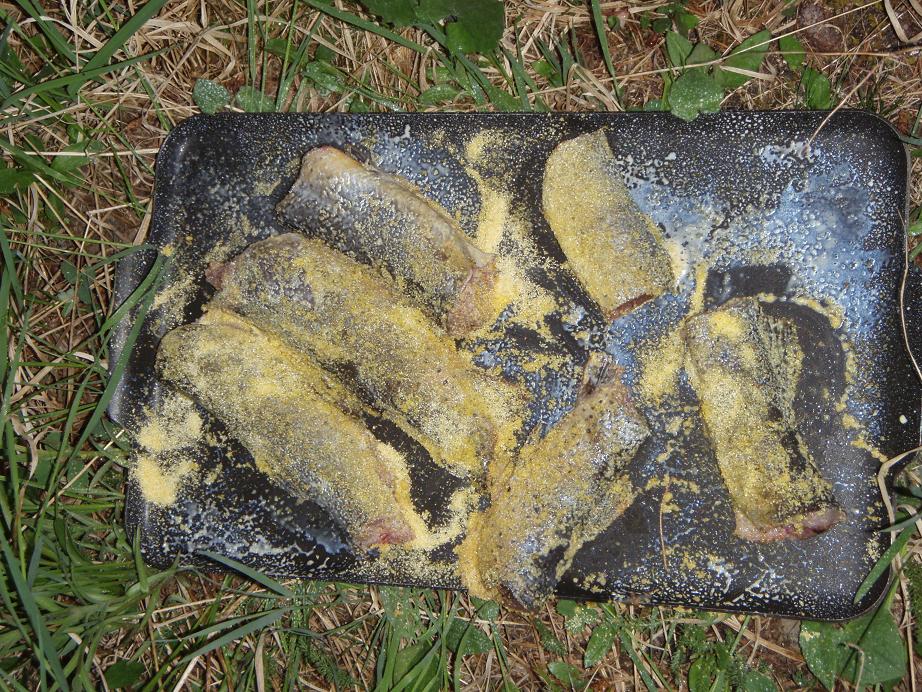 |
| The two burner Xpedition allows you to use a big griddle for big meals |
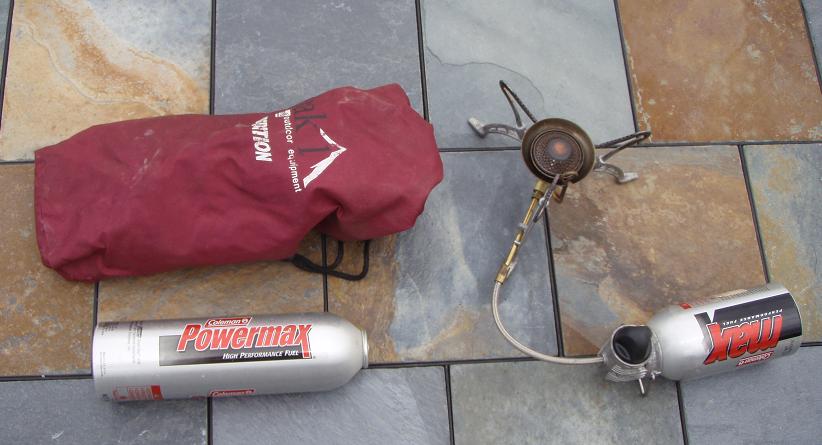 |
| The 2 burner model packs down quite compactly |
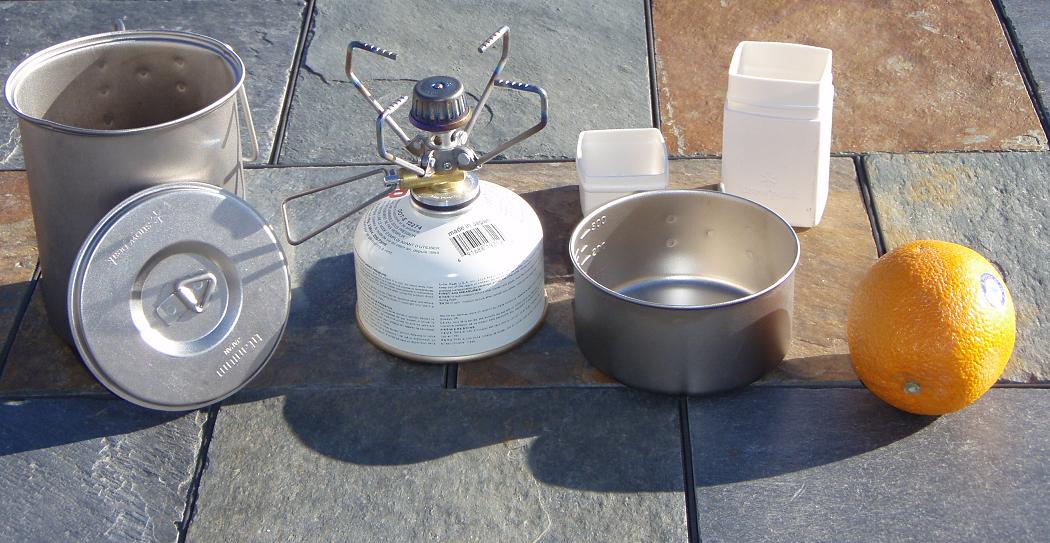 |
| Giga Stove and Mini Solo cook set. |
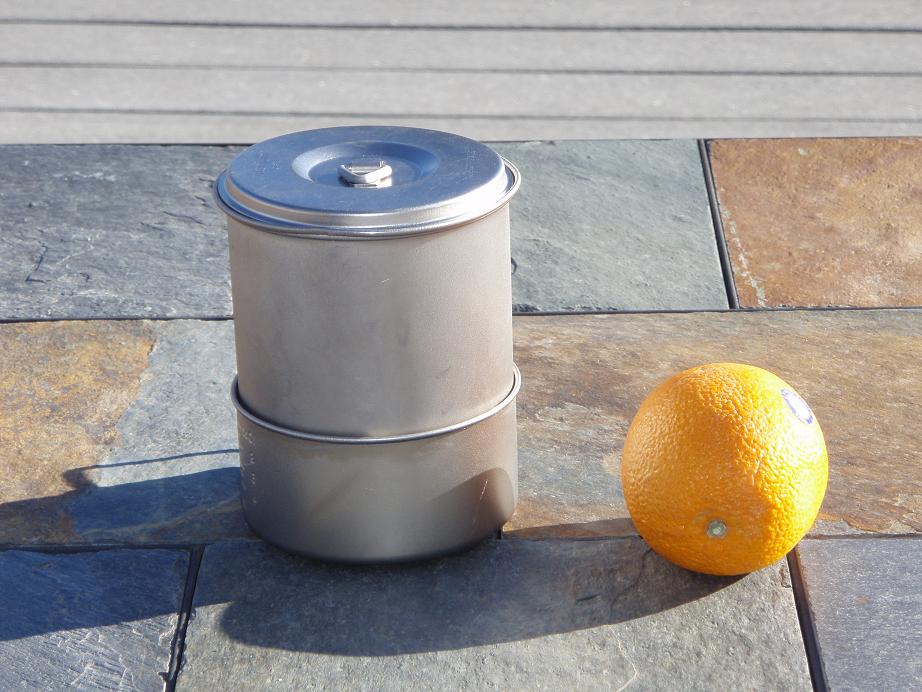 |
| The Giga stove and a fuel canister nests inside the Mini Solo cookware |